




Webex Contact Center Migration Services

Migrate from Legacy PBX, Avaya, Genesys & UCCE Risk Controlled, Zero Downtime

Legacy contact center infrastructure carries a compounding cost that rarely appears on a single line in the IT budget. Maintenance contracts on aging PBX hardware. Licensing fees for on-premises platforms that no longer receive meaningful development investment. Integration debt from custom connectors built to bridge systems that were never designed to communicate. Operational limitations that prevent the organization from adopting omnichannel engagement, AI powered routing, or real-time analytics because the underlying platform cannot support them.

The decision to migrate is rarely difficult once the full cost picture is visible. The complexity is in the execution. Webex contact center migration from a legacy environment to Cisco’s cloud native platform involves telephony transition, data migration, routing logic reconstruction, integration re-architecture, and agent onboarding all of which must be managed without disrupting the contact center operations the business depends on every day.

Maaz Technologies delivers structured webex contact center migration services for enterprise organizations moving from legacy PBX systems, on-premises contact center platforms, and alternative cloud environments. Every migration is managed by CWCCE certified engineers following a risk controlled transition methodology designed to minimize downtime, protect data integrity, and deliver a production ready Webex environment from the first day of cutover.
Request a Demo

Webex Contact Center Migration Services

Migrate to Webex Contact Center from Legacy Systems

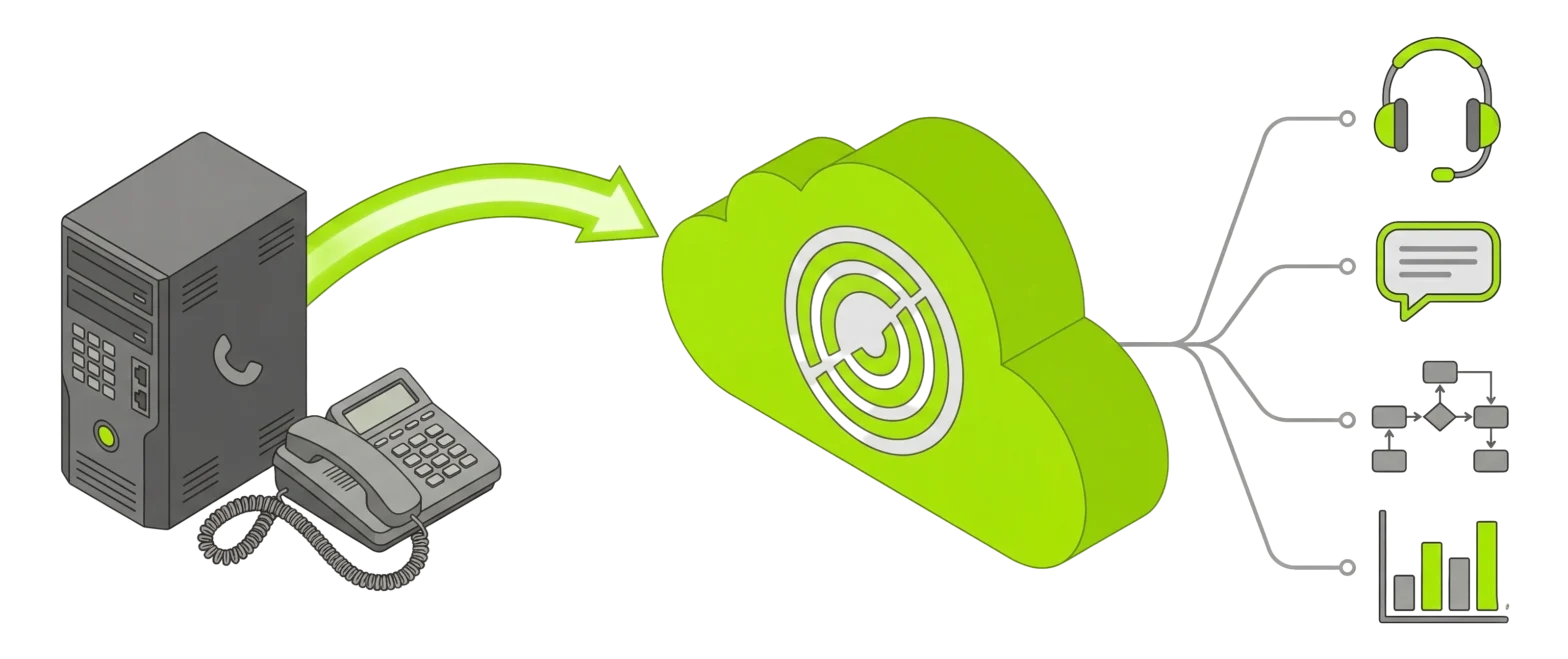
Legacy contact center migration is not a lift and shift operation. Every On premises platforms whether Cisco, Avaya, Genesys, carries configuration carry configuration logic routing rules, IVR flows, agent profiles, queue structures that was built incrementally over years and is often only partially documented. Migrating that logic to Webex Contact Center requires discovery, translation, and in many cases redesign, because the architectural models of legacy systems do not map directly to Webex Contact Center's cloud-native environment.


Common legacy contact center migration source environments include Cisco Unified Contact Center Enterprise (UCCE), Cisco Unified Contact Center Express (UCCX), Avaya platforms, Genesys on-premises deployments, and custom PBX-based environments built around legacy SIP infrastructure.


Each source environment carries its own migration complexity profile. UCCE and UCCX migrations benefit from platform familiarity but require careful translation of scripted routing logic into Webex Contact Center's flow architecture. Avaya and Genesys migrations require more extensive discovery work to document routing configurations, IVR trees, and integration dependencies before translation begins.


Maaz Technologies conducts a source environment audit at the start of every legacy contact center migration engagement documenting the current routing architecture, IVR logic, integration touchpoints, agent and team structure, and reporting configuration before designing the target-state Webex environment.

Migration Roadmap

Every Webex contact center migration engagement follows a structured roadmap designed to deliver a production-ready environment with managed risk and validated performance at each stage.

The migration process ensures operational continuity while transitioning systems, integrations, and routing logic to the Webex Contact Center platform.

View Migration Stages
Stage 1 — Discovery & Source Audit
Comprehensive documentation of the existing environment: routing architecture, IVR logic, integration landscape, agent and team structure, data flows, compliance requirements, and technical constraints.

Output: Source environment audit report and migration complexity assessment.
Stage 2 — Target State Design
Target Webex Contact Center architecture design covering routing strategy, IVR redesign, integration re-architecture, data migration approach, and cloud infrastructure configuration.

Output: Target state architecture document and phased migration plan.
Stage 3 — Parallel Environment Build
Full Webex Contact Center environment configuration and development executed while the legacy platform continues to carry live traffic.

CRM and system integrations configured and tested. IVR flows and routing logic built to target state design specifications.
Stage 4 — Validation & UAT
Comprehensive testing of the Webex environment against the source environment's operational baseline. UAT conducted by the organization's contact center operations team.

Performance validation, routing accuracy testing, integration data flow verification, and recording compliance validation.
Stage 5 — Phased Cutover
Structured migration of live traffic from legacy environment to Webex Contact Center in defined phases with validation gates between each stage.

Engineering coverage maintained throughout the cutover window.
Stage 6 — Stabilization & Legacy Decommission
Post-migration performance monitoring, routing optimization based on live traffic analysis, integration tuning, and final legacy environment decommission.

Legacy shutdown occurs after rollback window closure and system stability validation.

Migrate from Avaya to Webex Contact Center

Avaya to Webex Contact Center migration is one of the most common enterprise transitions Maaz Technologies manages. Avaya environments whether running Avaya Aura, Avaya CMS, or Avaya Elite Multichannel carry years of routing configuration, IVR scripting, and CRM integration logic that requires full discovery before any migration work begins.


The migration path from Avaya to Webex Contact Center involves three primary workstreams:


  • Routing Logic Translation: Avaya vectors and VDNs mapped into Webex Contact Center flow architecture.
  • Telephony Transition: SIP trunk re-routing and PSTN number portability.
  • CRM Integration Re architecture: rebuilding Avaya CTI connectors against Webex Contact Center's REST API and native connector framework.

Maaz Technologies conducts a dedicated Avaya source environment audit covering all vector logic, skill assignments, agent profiles, and reporting configurations before designing the Webex target state. This ensures no routing behaviour is lost in translation.

Cisco UCCE and UCCX to Webex Contact Center Migration

Cisco UCCE to Webex migration benefits from platform familiarity but requires careful architectural translation. UCCE's scripted routing logic built in Cisco's ICM scripting environment does not map directly to Webex Contact Center's Flow Designer architecture. Scripts must be analysed, decomposed, and rebuilt as Webex flows, not imported.


UCCX to Webex migration follows a similar process, with the added consideration that UCCX environments are often tightly coupled to on premises Cisco Unified Communications Manager (CUCM) infrastructure. Decoupling the contact center from CUCM and re establishing telephony connectivity through Webex Contact Center's cloud SIP architecture is a dedicated workstream in every UCCX migration.


Maaz Technologies engineers hold CWCCE certification.

Contact Center Cloud Migration Services | Strategy and Architecture

Contact center cloud migration services are not simply a technology swap they are a strategic transformation of how customer engagement is delivered, managed, and measured. Organisations that treat migration as a pure replication exercise consistently underperform against those that use the transition to redesign routing architecture, simplify IVR flows, and rationalise integration landscapes that accumulated complexity over years of incremental change.

On Premises to Cloud Migration Architecture
On premises to cloud migration introduces architectural decisions that do not exist in like for like platform replacements. Voice traffic that was previously handled entirely within the enterprise network perimeter must transition to a cloud managed SIP architecture. Recording infrastructure that lived on premises must be replaced with Webex Contact Center's cloud recording environment. Reporting systems built against proprietary on premises data schemas must be rebuilt or adapted to consume Webex Contact Center's analytics APIs.
Maaz Technologies designs cloud architecture migration plans that address these transition requirements explicitly not as afterthoughts discovered during testing, but as defined workstreams in the migration project plan. The cloud architecture target state is designed during the discovery phase, with each architectural decision documented and validated before build work begins.
Contact Center Modernization Through Migration
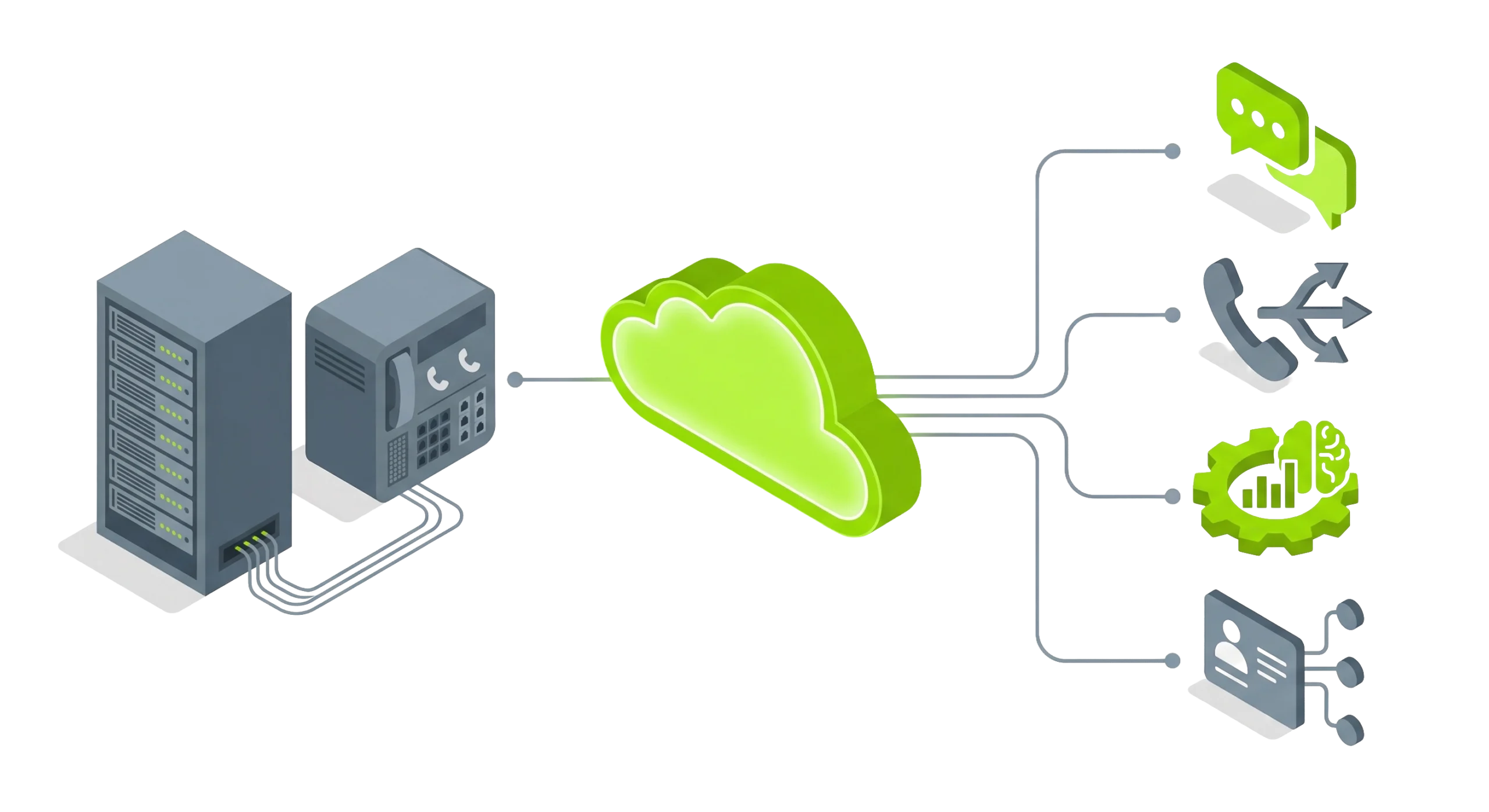
Contact center modernization is a business outcome, not a technical specification. Organizations migrating to Webex Contact Center have the opportunity to move from voice only to omnichannel engagement, from static IVR trees to AI powered routing, from siloed reporting to unified analytics dashboards capabilities that legacy platforms could not support regardless of configuration investment.
Maaz Technologies structures migration engagements to capture these modernization outcomes deliberately. The target state design is not constrained by the limitations of the source environment it is designed around the contact center capabilities the organization needs to deliver competitive customer experience in its market.

Data & CRM Migration

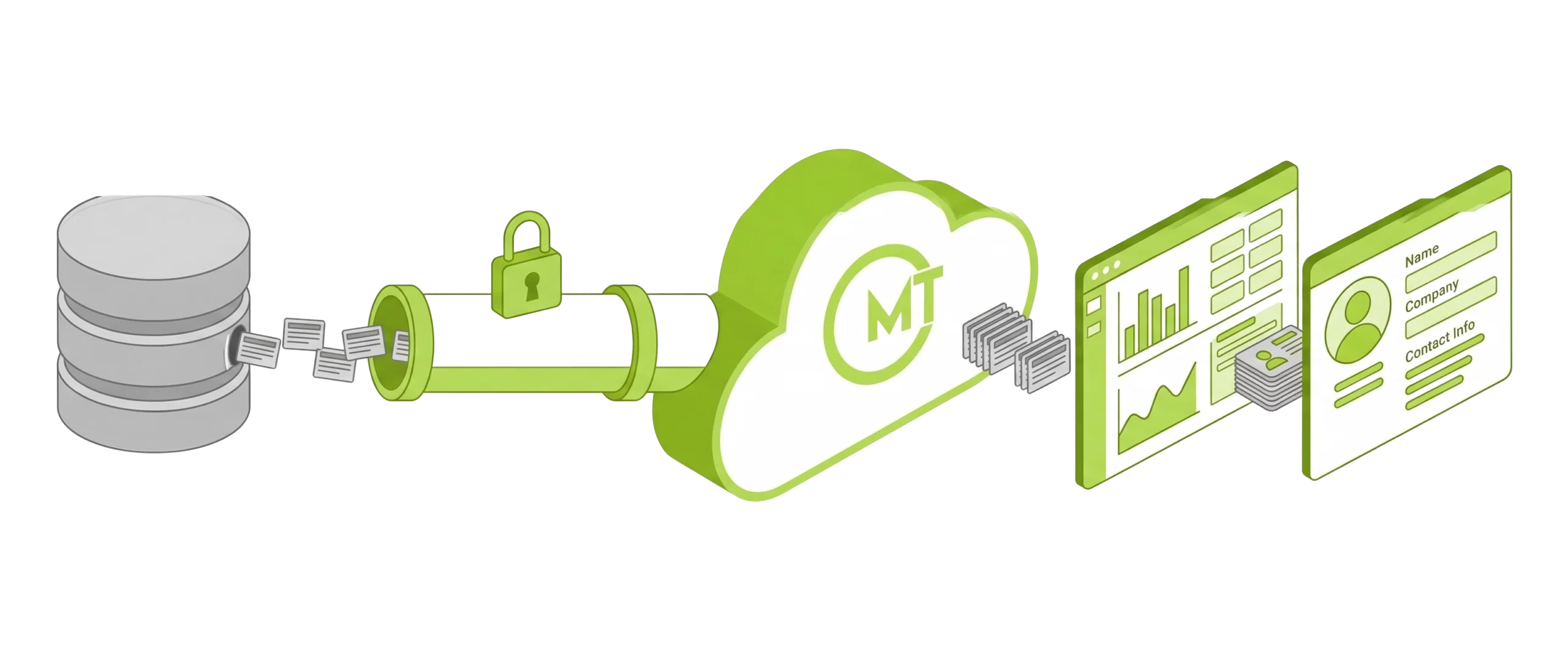
Contact center data migration encompasses the interaction records, customer profiles, case histories, and configuration data that represent the operational memory of the contact center environment. Losing or corrupting this data during platform transition creates compliance exposure, operational disruption, and customer experience failures that take months to recover from.

Interaction Records and Historical Data
Historical interaction data call records, digital interaction logs, disposition histories, quality management scores, and recording archives must be migrated with complete fidelity to the new environment or preserved in an accessible archive that meets the organization's data retention requirements.
Webex Contact Center's data architecture differs from legacy platforms, and direct schema mapping between source and target environments is rarely straightforward. Maaz Technologies designs data migration approaches that maintain record integrity and ensure post migration reporting continuity so analytics dashboards and historical performance comparisons remain valid across the platform transition boundary.
CRM Migration and Contact Record Synchronization
CRM integration re architecture during migration requires re establishing the data mapping, event trigger configuration, and synchronization logic that connected the legacy contact center to the CRM environment rebuilt against Webex Contact Center's API architecture rather than ported from the legacy integration layer.
This re architecture work is an opportunity to correct mapping errors, data quality issues, and synchronization gaps that accumulated in the legacy integration. Maaz Technologies treats CRM migration as a structured integration design exercise, not as a configuration copy exercise producing CRM connectivity that is more reliable and more complete than the legacy integration it replaces.

Risk Controlled Transition & Downtime Minimization

The operational continuity of the contact center during migration is a non-negotiable requirement for enterprise organizations. Customer facing operations cannot sustain multi-hour outage windows for platform cutovers. Revenue-generating contact centers in particular carry business impact exposure for every minute of unplanned downtime.

Phased Migration Plan Design

Phased migration planning is the primary mechanism for managing transition risk. Rather than a single event cutover that moves all traffic simultaneously from the legacy environment to Webex Contact Center, phased migration sequences the transition across defined segments by queue, by channel, by geographic region, or by customer segment validating each phase before the next segment migrates.


A typical phased migration structure for an enterprise environment includes:

Phase 1 — Parallel environment build:

Webex Contact Center environment is fully configured, tested, and validated while the legacy platform continues to carry live traffic

Phase 2 - Pilot cutover:

A defined subset of traffic typically a lower-volume queue or a single channel migrates to Webex Contact Center for validation under production conditions.

Phase 3 - Staged expansion:

Additional queues, channels, and agent populations migrate in structured increments, with validation gates between each stage

Phase 4 - Full cutover:

Remaining traffic transitions to Webex Contact Center, with the legacy environment maintained in standby for the rollback window

Phase 5 - Legacy decommission:

Legacy infrastructure is decommissioned following the completion of the rollback window and post-migration stabilization

Rollback Architecture and Contingency Planning

Every Maaz Technologies migration engagement includes a documented rollback architecture a defined technical path back to the legacy environment that can be activated within a defined timeframe if critical issues arise during cutover phases. Rollback architecture is designed before migration begins, not improvised in response to go live problems.

Contingency Planning
Contingency planning extends beyond rollback to cover partial failure scenarios individual queue failures, integration disruptions, and telephony routing issues that may affect subsets of traffic during migration without requiring full rollback. Each contingency scenario is documented with response procedures, responsible engineers, and escalation paths.
SIP Transition Management
SIP transition is one of the highest risk elements of any contact center migration. Moving inbound call routing from a legacy SIP infrastructure to Webex Contact Center's cloud SIP architecture requires coordinated changes across carrier routing tables, SIP trunk configurations, and PSTN number portability changes that, if sequenced incorrectly, can result in inbound call failures that affect the entire contact center.
Maaz Technologies manages SIP transition as a dedicated workstream within every migration engagement, with carrier coordination, pre transition validation testing, and cutover sequencing designed to eliminate the risk of inbound routing failures during the transition window.

Ready to Move Your Contact Center to Webex?

Legacy infrastructure is not a neutral cost. Every month spent managing aging on premises platforms is a month of deferred access to the omnichannel engagement, AI powered routing, and analytics capabilities that cloud native contact center environments deliver as standard.

Schedule a Migration Consultation : Discuss your legacy environment, migration timeline, and risk requirements with a CWCCE-certified Webex migration engineer.

Request a Migration Readiness Assessment : Receive a structured evaluation of your current environment with a recommended migration approach, phased roadmap, and complexity estimate.

Talk to a Webex Migration Expert : Get direct technical answers to SIP transition, data migration, CRM re architecture, and cutover planning questions from an engineer with enterprise migration experience.

Get Started

FAQs

Webex Contact Center migration is supported from Cisco UCCE, UCCX, Avaya, Genesys on premises, and custom PBX based environments, as well as alternative cloud contact center platforms. Each source environment carries a distinct migration complexity profile that is assessed during the discovery phase.

Downtime is minimized through phased migration architecture building and validating the Webex environment in parallel with the live legacy platform, then migrating traffic in structured increments with validation gates between each phase. A rollback architecture is defined before migration begins, enabling return to the legacy environment within a defined timeframe if critical issues arise during cutover

Historical interaction data is addressed through a data migration strategy designed during the target state design phase. This covers record format translation, archive accessibility, reporting continuity, and data retention compliance. Interaction records that cannot be migrated directly to Webex Contact Center are maintained in accessible archives meeting the organization’s retention requirements.

SIP transition is the process of moving inbound call routing from a legacy SIP infrastructure to Webex Contact Center’s cloud SIP architecture, including carrier routing table updates, SIP trunk configuration changes, and PSTN number portability coordination. It is managed as a dedicated workstream due to the operational risk it carries if sequenced incorrectly

Yes. The phased migration methodology parallel environment build, pilot cutover, staged expansion, and full cutover is specifically designed to enable migration without disrupting live contact center operations. The legacy environment remains fully operational and carries live traffic until each migration phase is validated.

Migration timelines depend on the source environment complexity, agent and queue scale, integration re-architecture scope, and data migration requirements. Focused migrations from simpler legacy environments can complete within six to ten weeks. Large scale enterprise migrations from complex multi site, multi integration legacy platforms follow phased delivery plans spanning three to six months. Every legacy contact center migration engagement begins with a source environment audit that determines the complexity tier and informs the delivery timeline. Ready to Move Your Contact Center to Webex

Leave us message

How May We Help You!