
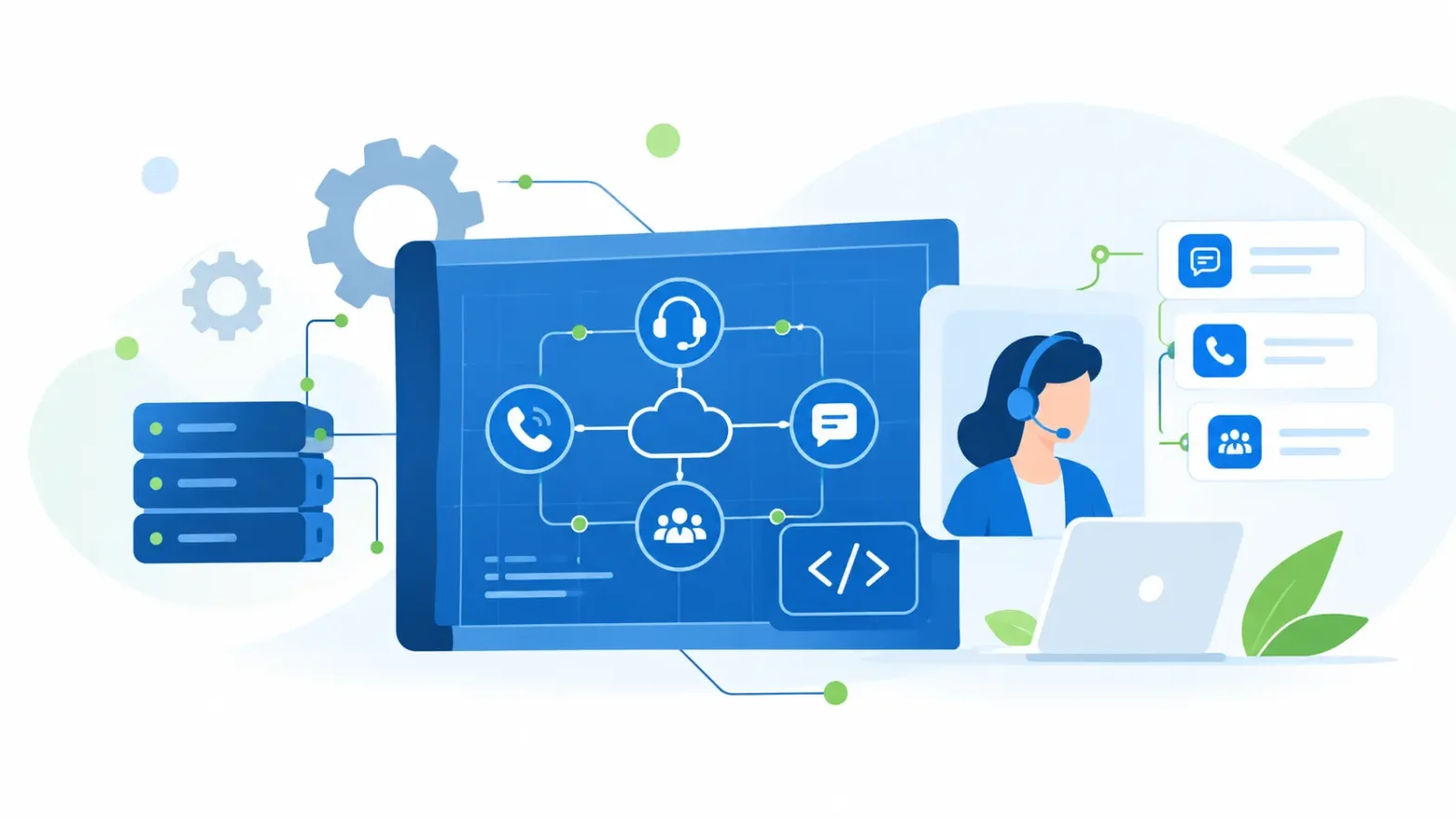







Webex Contact Center Development for Advanced Workflows
Standard Webex Contact Center configuration, delivered through our Webex Contact Center implementation services, provides the foundation. Custom development builds the environment on top of that foundation that the organization's specific customer engagement model requires.
Webex contact center development spans multiple technical domains each of which requires deep platform knowledge to execute correctly. Poorly designed call flow architecture creates routing loops, abandoned interactions, and IVR dead ends that generate customer frustration and repeat contacts. Incorrectly configured routing logic produces queue imbalance, agent underutilization, and SLA failures under load. Agent desktop environments built without workflow analysis slow handle time and introduce manual error risk.
Maaz Technologies approaches custom Webex solutions development as an engineering discipline, not a configuration exercise. Every development engagement begins with operational analysis understanding the actual interaction patterns, agent workflows, escalation scenarios, and exception cases the environment must handle before a single flow element is built.
Custom Webex solutions developed by Maaz Technologies have supported enterprise environments across financial services, healthcare, technology, and retail, delivering measurable reductions in average handle time, first-contact resolution improvements, and agent productivity gains that generic configurations do not achieve.
IVR Development & Call Flow Design
IVR development is where customer experience is made or lost before an agent ever answers. An IVR that confuses callers, buries escalation paths, or fails to authenticate correctly at scale generates abandonment, repeat contacts, and CSAT degradation that routing optimization alone cannot recover.
IVR Scripting and Interaction Design
IVR scripting in Webex Contact Center encompasses the full logical architecture of the automated interaction from initial greeting through menu traversal, self-service execution, conditional branching, authentication flows, and agent handoff. Every prompt, every branch condition, and every error handling path is a deliberate design decision that affects interaction completion rates and customer experience outcomes.
Maaz Technologies develops IVR scripts that balance automation depth with interaction clarity. The design principles applied across every IVR development engagement prioritize:
- Prompt economy — minimizing the number of steps between caller intent and resolution, reducing cognitive load and abandonment probability
- Graceful escalation — ensuring that callers who cannot or choose not to self-serve reach an agent without friction, at any point in the IVR flow
- Error recovery — designing handling paths for no-input, unrecognized input, and repeated failure scenarios that maintain interaction momentum rather than terminating to an error state
- Authentication integration — embedding account verification flows that surface caller data for agent screen-pop before the interaction is transferred, eliminating agent authentication time from handle calculations
Call Flow Architecture
Call flow architecture defines the complete logical path every interaction follows from channel entry through resolution across IVR, queue assignment, agent handling, transfer logic, escalation paths, and post-interaction workflows. In enterprise environments, call flow architecture is genuinely complex: multiple entry points, conditional routing based on real-time data lookups, skills cascade logic, priority queue insertion, and multi-transfer scenarios all require careful design to execute without creating routing failures under production conditions.
Maaz Technologies designs call flow architecture against the organization's actual operational model. This includes after-hours routing, holiday schedule handling, emergency override configurations, and disaster recovery call paths the exception scenarios that generic implementations leave underdefined and that cause the most operational disruption when they activate unexpectedly.
Routing Logic & Automation Configuration
Routing logic is the intelligence layer of the contact center the set of rules that determines which agent receives which interaction, under what conditions, in what priority order, and through what cascade sequence when preferred match conditions are not immediately available.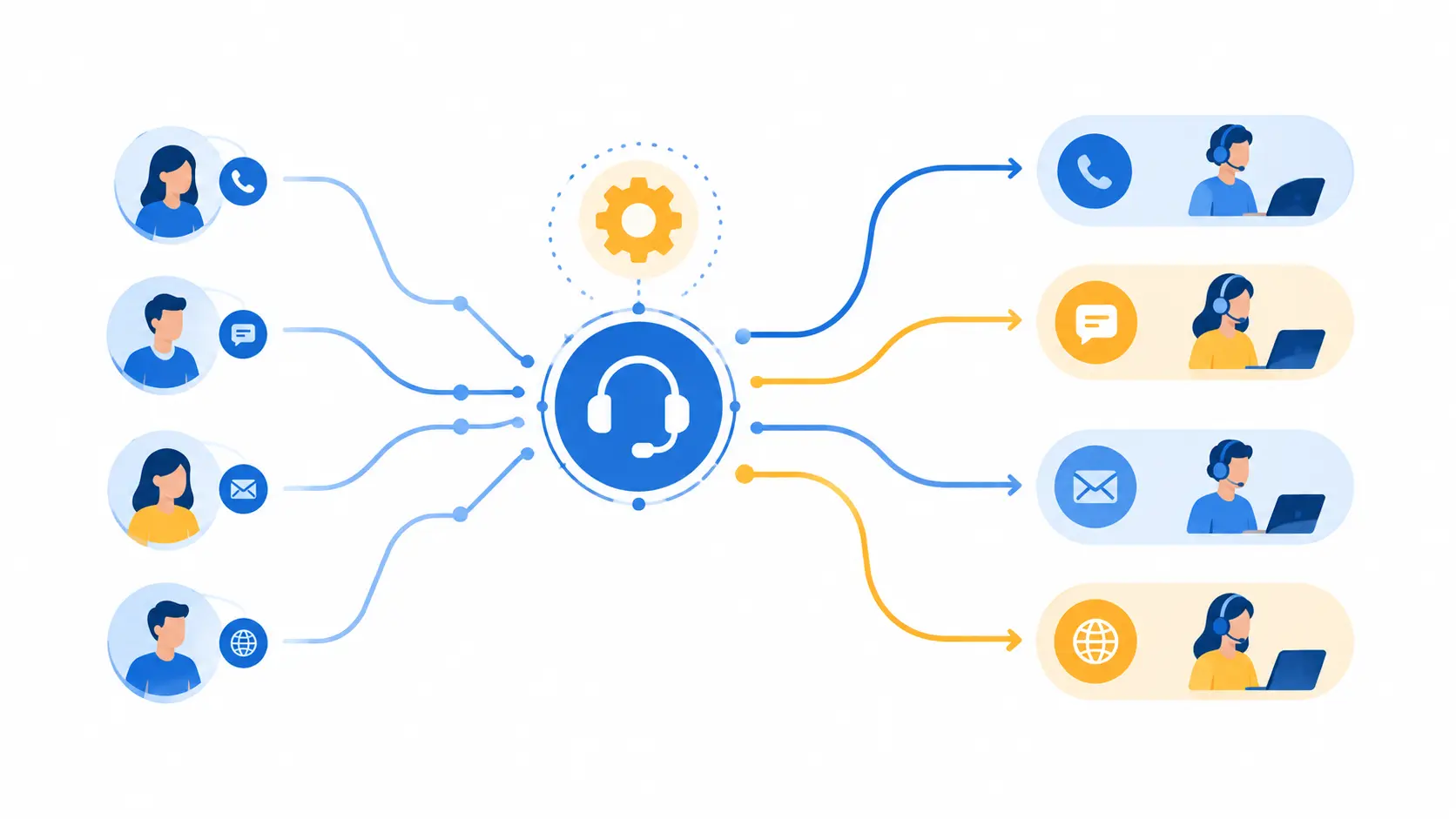
Agent Desktop & Custom Scripting
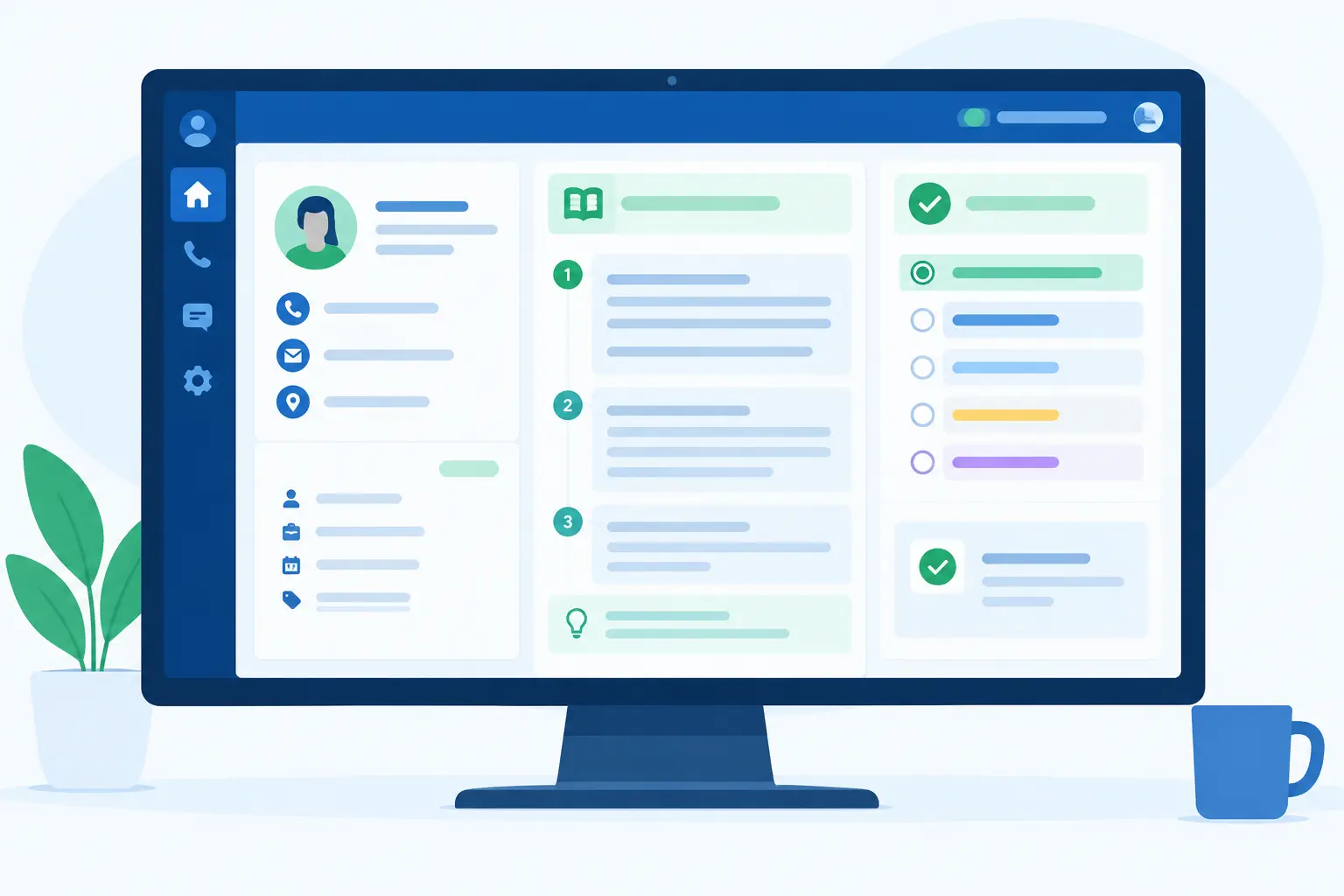
The agent desktop environment is where routing quality and integration architecture translate into actual agent performance. An agent desktop that surfaces the right data, in the right layout, with the right workflow prompts reduces average handle time, minimizes after-call work, and improves interaction quality measurably and consistently.
Agent Desktop Development
Webex Contact Center's agent desktop supports customization through widget configuration, panel layout design, and embedded application integration. Custom agent desktop development addresses the specific data, workflow, and tooling requirements of the organization's agent teams.
Development scope typically includes CRM data panel configuration for real-time customer data display, interaction history widget development for prior contact visibility, custom wrap-up code configuration reflecting the organization's disposition taxonomy, and embedded application widgets that surface internal tooling knowledge bases, pricing engines, case management systems within the desktop without requiring context-switching between applications.
Agent scripting development provides agents with structured interaction guides embedded in the desktop environment prompting correct disclosure language, compliance-required statements, and interaction structure for regulated industries, or providing dynamic product and pricing information for sales-oriented contact centers.
Queue Logic and Custom Workflow Scripting
Queue logic development extends the standard Webex Contact Center queue behavior with custom workflow elements priority manipulation logic, interaction metadata tagging that supports downstream reporting, custom disposition workflows, and automated post-interaction processing that initiates CRM updates, case creation, or outbound follow-up scheduling without agent manual input.
Custom scripting in this context requires both platform expertise and an understanding of the broader system architecture the scripted behaviors in Webex Contact Center need to produce reliable outputs in the connected CRM, ticketing, and analytics environments downstream.
AI & Chatbot Integrations
Conversational AI and voice bot capabilities within Webex Contact Center extend automation coverage to interaction types that traditional IVR cannot handle natural language queries, multi-turn dialogue flows, and intent-based routing decisions that require semantic understanding rather than touch-tone input.
Voice Bot Configuration
Voice bot configuration within Webex Contact Center involves integrating conversational AI engines including Cisco's native AI capabilities and third-party NLU platforms into the IVR interaction flow. Voice bot development requires intent model design, entity extraction configuration, dialogue flow architecture, fallback handling design, and smooth handoff to live agents when the bot reaches the boundary of its competency.
Maaz Technologies develops voice bot configurations that are operationally realistic designed around the actual intents the organization's callers express, with fallback behaviors that maintain interaction momentum when the bot cannot resolve the request, rather than creating dead ends that force callers to restart.
Chatbot Integration for Digital Channels
Digital channel automation through chatbot integration extends the Webex Contact Center automation layer to web chat, messaging platforms, and email-to-chat conversion flows. Chatbot integration development covers intent classification configuration, response flow design, CRM data lookup integration within bot sessions, and seamless escalation to live agent queues with full conversation context transfer so agents do not require customers to repeat information the bot already collected.
Ready to Build a Contact Center That Performs to Your Operational Requirements?
Generic configuration produces generic outcomes. Enterprise contact centers that invest in custom development IVR flows designed around actual caller behavior, routing logic built to reflect operational reality, agent desktops that eliminate friction — consistently outperform environments running on platform defaults.
Maaz Technologies delivers custom Webex Contact Center development services through CWCCE-certified engineers with validated expertise in IVR development, call flow architecture, routing logic configuration, and AI integration.
GET STARTED